Tennis elbow: pain on the outside of the elbow, explained.
Tennis elbow is a tendon problem, and most people who get it have never played tennis. It is common in people who type, use a mouse, lift or grip for long hours.
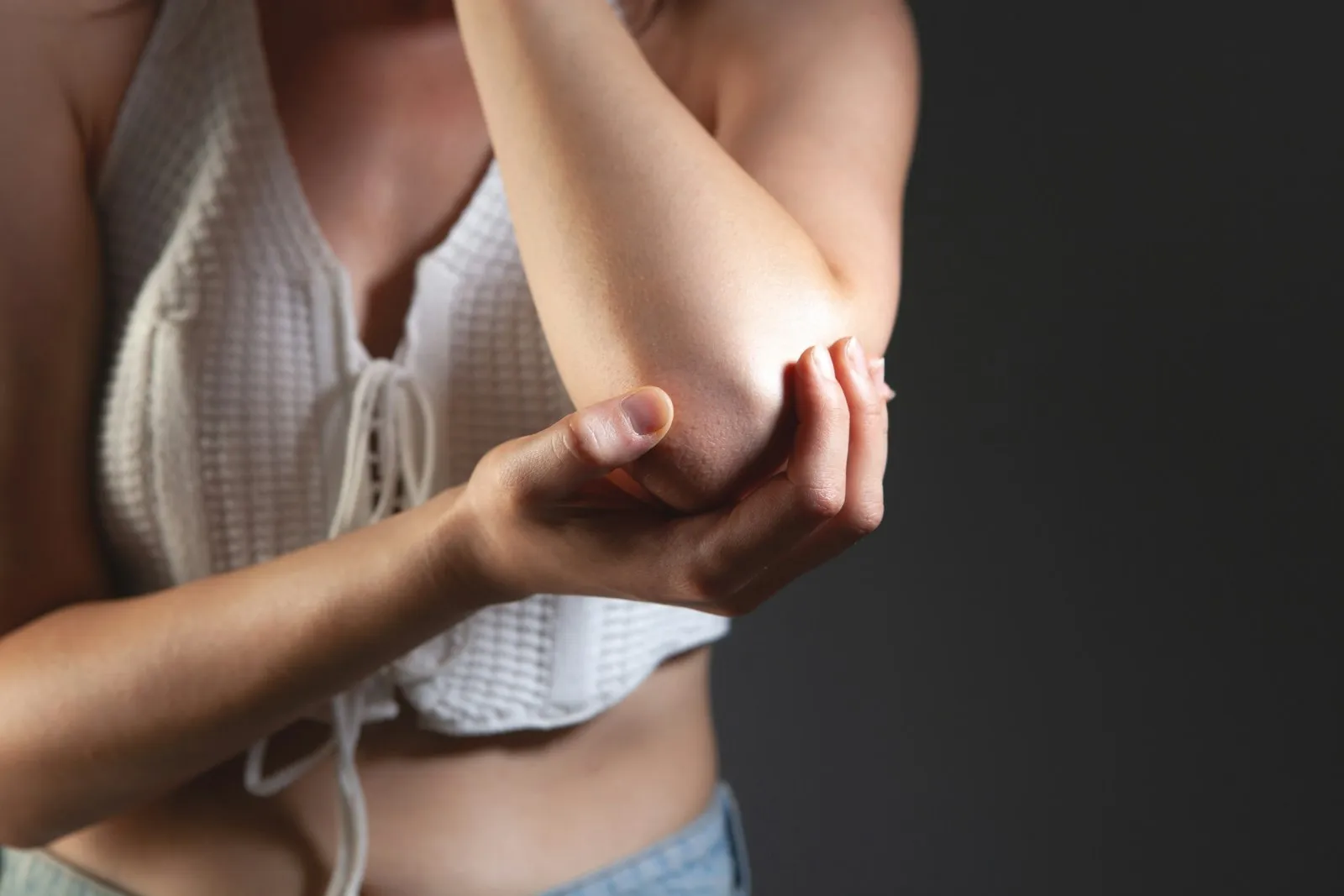 Photo: Sasun Bughdaryan / Unsplash
What is the best treatment for tennis elbow?
The best-supported treatment for tennis elbow is a graded strengthening programme for the forearm muscles, combined with changes to the gripping and lifting that overload the tendon. Hands-on care, a forearm strap and focused shockwave therapy can help in the short term. At GetFysio in Koramangala, Bengaluru, we build all of this into one plan after a full assessment.
Clinically reviewed by Dr. Saritha Gade PT, Founder & Clinical Director ·
Tennis elbow, in plain words.
Tennis elbow, also called lateral epicondylitis, is pain where the forearm muscles that lift the wrist attach to the outside of the elbow. The tendon becomes irritated when it is asked to do more gripping and lifting than it is used to.
It is one of the most common elbow problems in office workers in Bengaluru, because long hours at a keyboard and mouse load the same tendon all day.
Common symptoms
- Pain on the outside of the elbow, sometimes spreading down the forearm
- Pain when gripping, lifting a kettle or bag, or turning a door handle
- Pain with typing or using a mouse for long periods
- A weaker grip than usual
- Tenderness when you press on the bony point on the outside of the elbow
Causes and risk factors.
What makes it more likely
- Repeated gripping, lifting or twisting at work, at home or in sport
- Long hours at a keyboard and mouse with the wrist bent back
- A sudden increase in an activity, such as a new sport or a house move
- Racket sports with poor technique or the wrong grip size
- Age: it is most common between 35 and 55
See a doctor or physiotherapist promptly if you have
- Pain that started with a fall or a sudden pop
- Swelling, redness or a hot elbow
- Numbness or tingling into the hand or fingers
- Elbow pain with neck pain or pain spreading down the whole arm
Exercises and tips to start with.
General advice for mild symptoms. Stop any exercise that causes sharp or spreading pain, and book an assessment if things are not improving within two to three weeks.
- 01
Hold, then strengthen
Rest your forearm on a table, palm down, and press the back of your hand up into your other hand without moving. Hold for 30 to 45 seconds, five times. Mild discomfort is fine; sharp pain is not.
- 02
Slow lowering with a light weight
With the forearm supported and palm down, use your other hand to lift the wrist up, then lower it slowly over four seconds holding a water bottle. Do three sets of 15, once a day, and increase the weight slowly over weeks.
- 03
Change how you grip and lift
Lift bags and pans with your palm facing up, use both hands, and take short breaks from typing. A wider grip on tools and a vertical mouse can reduce the load.
- 04
Try a forearm strap
A tennis elbow strap worn just below the elbow can ease pain during activity for some people. It does not fix the tendon on its own.
Three parts, one plan.
- 01
Find the load that triggers it
We test grip strength and the elbow, wrist, shoulder and neck, and look at your work set-up, sport and daily tasks to find what keeps the tendon irritated.
- 02
Ease the pain
Hands-on care, taping and, where it helps, focused shockwave therapy or high-intensity laser therapy, so you can load the tendon more comfortably.
- 03
Load the tendon gradually
A staged strengthening programme for the forearm, wrist and shoulder, with practical changes to your desk set-up, grip and technique.
- Focused shockwave therapyFocused sound-wave pulses that reach deep tendon, heel and muscle pain.
- High-intensity laser therapyFocused light to ease pain and inflammation.
- Manual therapy on the Manuthera tableHands-on joint and soft-tissue treatment, with precise traction.
- Dry needlingFine needles to release tight, tender muscle knots.
Only when your assessment shows it will help, and always alongside exercise.
What recovery usually looks like.
Everyone is different. After your assessment we will give you your own estimate, and review it as you progress.
- Weeks 1–4
Ease the pain, change the tasks that aggravate it and start holding exercises.
- Weeks 4–12
Progress strengthening and return to normal gripping, lifting and work.
- 3 months +
Tendon recovery can take several months. We track grip strength and pain with you along the way.
Tennis elbow: common questions.
How long does tennis elbow take to heal?
Tennis elbow often takes three to six months to settle, and some cases take longer. A consistent strengthening programme and changes to how you grip and lift usually speed recovery compared with rest alone.
Can you get tennis elbow without playing tennis?
Yes. Most people with tennis elbow do not play tennis. It is common in people who type, use a mouse, lift or grip for long hours, and in manual work.
Does shockwave therapy help tennis elbow?
Focused shockwave therapy can ease pain in long-standing tennis elbow for some people. At GetFysio in Koramangala, Bengaluru, it is only used alongside a strengthening programme, never on its own.
Should I rest my arm completely?
No. Complete rest weakens the tendon. Reduce the tasks that make it flare, and keep the arm working with exercises that load the tendon gradually.
Are steroid injections a good idea for tennis elbow?
Steroid injections can ease pain for a few weeks, but studies show more people have pain again later than with physiotherapy. Discuss the options with your doctor and physiotherapist.
Sources
This page is general information from GetFysio physiotherapists, not a diagnosis or a substitute for an assessment. If you are worried about your symptoms, see a physiotherapist or doctor.
Ready to get moving?
Book an assessment for tennis elbow in Koramangala. We will find the cause and give you a clear plan.